Summer School and Workshop on Optimization and Operator Learning
As event of SaC3 we organize a summer school and conference at the Universidad Nacional de Trujillo in Trujillo, Peru. School and workshop will take place from February 24 to 27, 2026. The summer school will be preceded by a pre-school on February 20 and 23, in which basic concepts will be taught and which will serve to deepen the knowledge of programming with Python.

Date and location
Universidad Nacional de Trujillo, Trujillo, Peru
February, 2026
Venue
The school will be held in at the
Universidad National de Trujillo in the Math Faculty building:
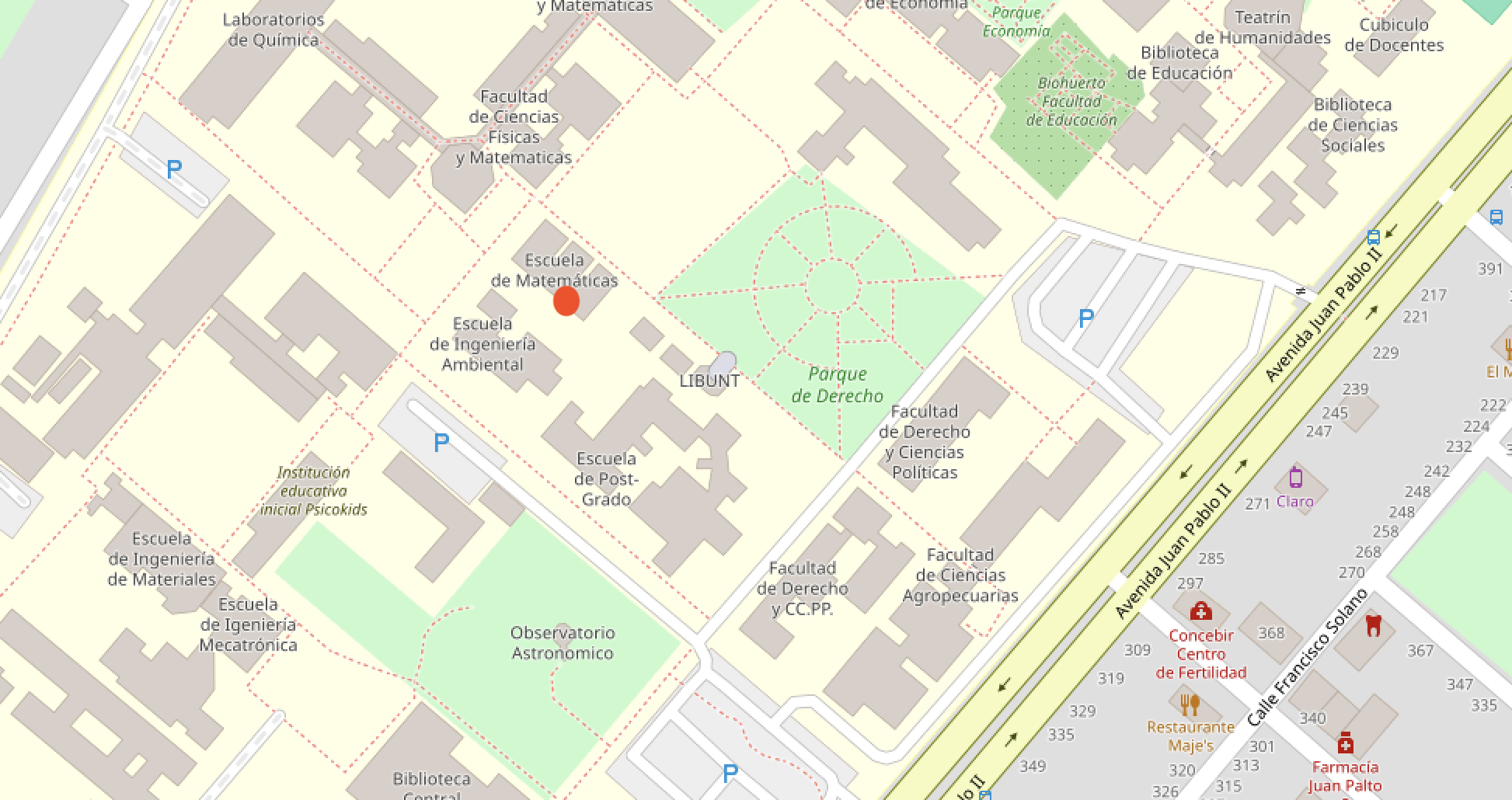
The reception on Monday afternoon will be held in at the
Paraninfo Universidad Nacional de Trujillo at the Plaza de Armas:
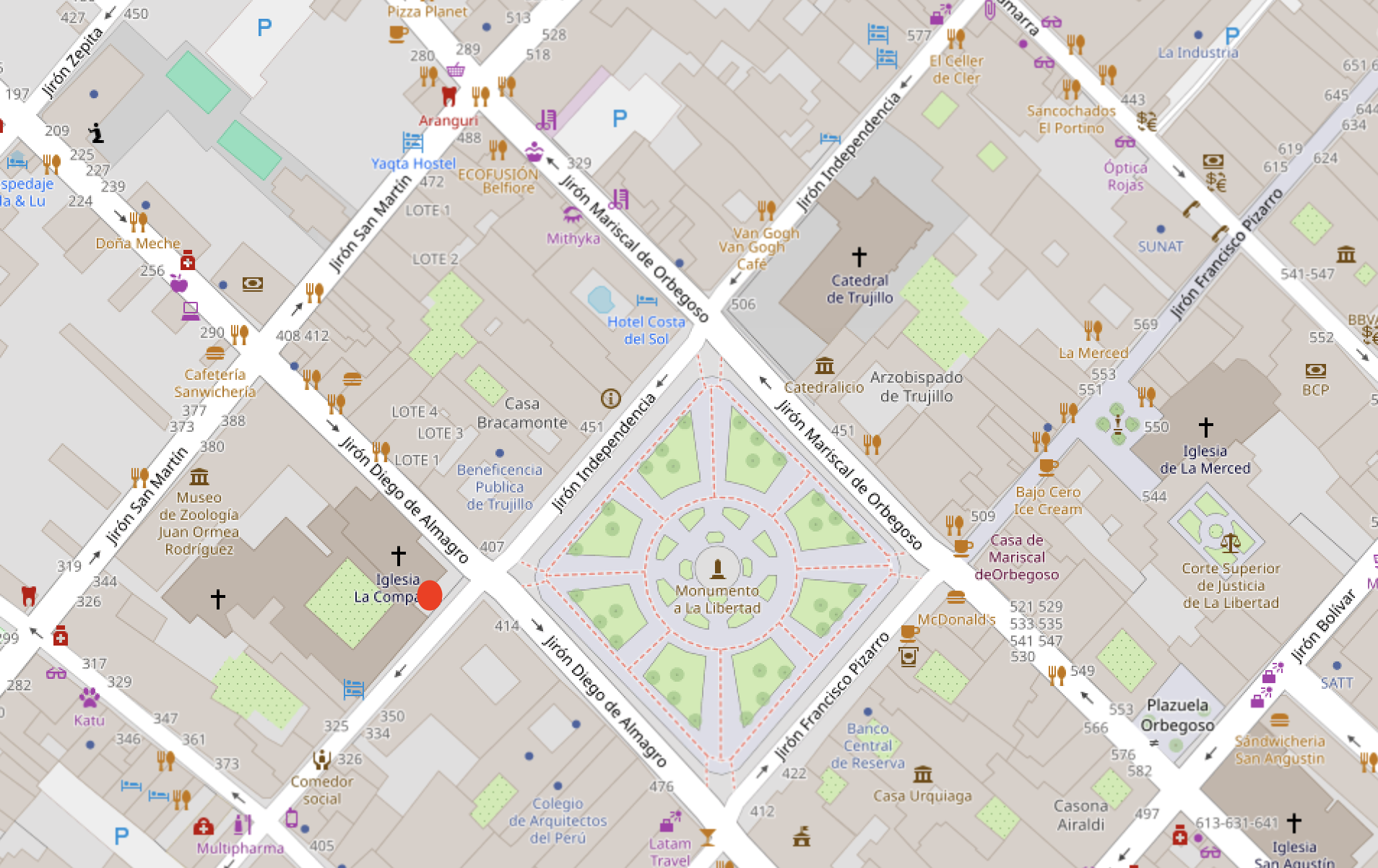
Contents
The main topics of the school include mathematical optimization and the theory of learning operators using methods of machine learning. A group of lecturers, all experts in these fields, will give introductions.
In the afternoon sessions we will go into detail and learn how to apply the methods in simple Python projects. These Python courses are aimed at students with some prior knowledge of Python.
During the last days of the week we will go over to a workshop character. Experts will present their research in the field of mathematical epidemiology. A call for papers for your contributions of posters and talks will be announced.
Material
- Website of the Python course: https://notaspedrok.com.br/mini_python_es/index.html
- Shared directory in the Cloud with lecture material and Python exercises: https://cloud.ovgu.de/s/5cAEdG9FA98inot
- How to Access the Material
Survey
As part of the constant evaluation of the SAC3 project we kindly ask you to give us your feedback by participating in this anonymous survey.
Pre-School
We will organize a short pre-school with an introduction to numerical linear algebra and scientific computing using Python. During the pre-school, we will cover two topics that will be of interest during the summer school: the gradient descent method for non-linear optimisation and linear regression. Theoretical sessions will be held in the morning, but the focus will be on practical work in the form of exercises and programming experiments in Python. As we will be a small group, you will be able to work on your own projects under our supervision. Based on your programming experience, we will divide the group and also offer Python classes. We expect you to continue working on your projects over the weekend, ready for presentations on Monday.
Fee
The local organisers may charge a moderate fee to cover expenses. If so, the fee will be published here by 16 January at the latest.
Contact
Thomas Richer at Otto von Guericke University Magdeburg thomas.richter@ovgu.de.
Organizers
Local organizers from Universidad Nacional de Trujillo
Responsible organizers of SaC3
- Stefan Frei, Konstanz University
- Dayron Dominguez, University of Magdeburg
- Thomas Richter, University of Magdeburg
Responsible Lecturers for the Summer School
- Peter Benner, Max Planck Institut for Dynamics of Complex Technical Systems Magdeburg
- Malte Braack, Kiel University
- Thomas Richter, University of Magdeburg
- Pedro Konzen, Universidade Federal do Rio Grande do Sul, Porto Alegre
- Thomas Richter, Otto von Guericke University Magdeburg
- Yevgeniya Filanova, Max Planck Institut for Dynamics of Complex Technical Systems Magdeburg
- Leonidas Gkimisis, Max Planck Institut for Dynamics of Complex Technical Systems Magdeburg
- Konrad Janik, Max Planck Institut for Dynamics of Complex Technical Systems Magdeburg
- Martyna Minakowska, Otto von Guericke University Magdeburg
- Hannah Scherer, Kiel University
- Dr. Obidio Rio Mercedes
- MSc. Julio César peralta Castañeda
- Dr. Edmundo Vergara Moreno
- Dr. Nelson Aragonés Salazar
- Dr. Franco Rubio López
-
Comité de Recepción y Turismo
- Prof. Jenny Rojas Jerónimo
- Prof. Alexis Rodríguez Carranza
- Prof. Rocío Rojas Jara
- Tesista Bianca Solorzano Carrillo
- Alumna María Laura Noriega de la Cruz
- Prof. Ronald León Navarro
- Prof. Orlando Hernández Bracamonte
- Prof. Juan Ponte Bejarano
- Prof. Luis Lara Romero
- Prof. José Luis Ponte Bejarano
- Alumno Jomar Rivas Cabanillas
- Alumno David Alexander Alfaro Benaute
- NumPy: For numerical computations and array operations.
- SciPy: For scientific computations, including ODE solvers.
- PyTorch: For machine learning.
Schedule of the Pre-School
Friday, Feburary 20
Schedule of the Summer-School and Workshop
Tuesday, February 24Python classes
The Python exercises will be carried on using its powerful ecosystem of scientific computing libraries, including:
Using JupyterLab for Programming
Throughout this course, we will use JupyterLab as a programming tool. JupyterLab provides an interactive environment for writing and running Python code. We highly recommend installing it in your Python environment. Please, follow the installation instructions of the official JupyterLab website.