Research Programme
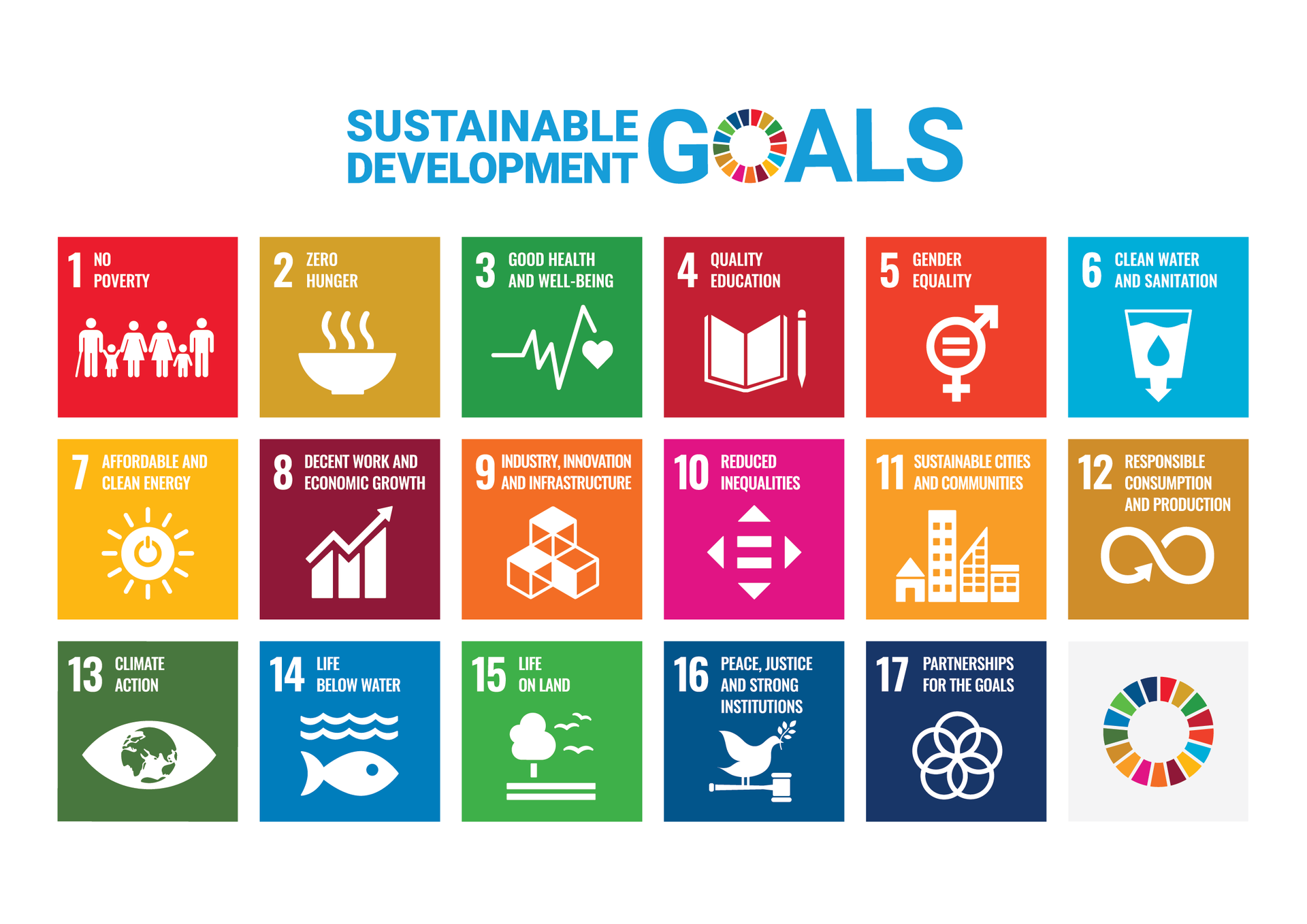
The researchers of SaC3 work together in several research projects evolving around the defining topics health and climate. The wide expertise in applied mathematics, numerical analysis, optimization, scientific computing, machine learning and data science is brought together to tackle challenging problems in the context of UN Sustainable Development Goals in Germany and the partner countries. The doctoral programme is the core of the research programme, and it is complemented by a number of associated projects that are funded externally.
Doctoral Training Programme
At the heart of SaC3 is an international doctoral programme in which German and South American partner universities jointly educate young researchers in scientific computing. The doctoral projects address mathematical questions arising in the two application areas of the network – health and climate: the modelling and control of infectious diseases and their vectors, and the simulation of water resources such as groundwater, rivers and glacier melt in the Andes. All projects are rooted in the local context of the partner countries and contribute to the UN Sustainable Development Goals.
Joint supervision. Each doctoral project is supervised by a team of principal investigators from at least one German and one South American partner university. Where useful, further expertise from the network is included, for example from partners working on epidemiology or engineering. The principles of supervision are laid down in supervision agreements, following the practice of structured graduate schools in Germany and adapted together with our partners to the local context. In this way, the programme strengthens the structures of doctoral education at the partner universities.
Exchange and training. Doctoral researchers spend research stays of one to two months with their supervisors at the partner universities in Germany, and doctoral researchers associated from the German side visit the partners in South America. The annual summer schools and workshops bring the whole group together and give the students the opportunity to present their research. Results are published in international peer-reviewed journals. For outstanding candidates, co-tutelle agreements between the universities are envisaged.
Funding. Selected doctoral projects at the South American partner universities receive funding from the project, which is supported by the DAAD within the programme SDG-Partnerships with funds from the German Federal Ministry for Economic Cooperation and Development (BMZ). Further doctoral projects with external funding are associated with the programme and take part in all its activities.
Doctoral researchers
Tatiana Giron Carabali Universidad del Valle, Cali, Colombia
Modeling and simulation of Wolbachia-carrying mosquitoes for dengue control
- Stefan Frei (University of Konstanz)
- Carmen Alicia Ramirez (Universidad del Valle)
- Heliana Arias Castro (Universidad del Valle)
Rocío del Pilar Rojas Jara Universidad Nacional de Trujillo, Peru
Finite element simulation of groundwater flow in unconfined and anisotropic aquifers
- Thomas Wick (Leibniz University Hannover)
- Obidio Rubio Mercedes (Universidad Nacional de Trujillo)
Gabriel Schmökel Universidade Federal do Rio Grande do Sul (UFRGS), Porto Alegre, Brazil
Deep Learning Simulations of the Solow-Swan Economic Growth Model in the Brazilian Territory
- Thomas Richter (Otto von Guericke University Magdeburg)
- Pedro Konzen (UFRGS, Porto Alegre)
Associated doctoral researchers
Marcelo Mokwa de Mello Universidade Federal do Rio Grande do Sul (UFRGS), Porto Alegre, Brazil
- Malte Braack (University of Kiel)
- Pedro Konzen (UFRGS, Porto Alegre)
Funded by SaC3 from 04/2026 to 09/2026. Since 10/2026 externally funded and continuing as an associated member of the doctoral programme.
Renato Aloisio dos Santos Klein Universidade Federal do Rio Grande do Sul (UFRGS), Porto Alegre, Brazil
ANN-DG Method for Inverse Problems in the Two-Dimensional Radiative Transfer Equation
- Thomas Richter (Otto von Guericke University Magdeburg)
- Pedro Konzen (UFRGS, Porto Alegre)
Associated member of the doctoral programme.
Completed theses
Neisser Pino Romero Universidad Nacional Mayor de San Marcos, Lima, Peru
Spatial variability for an eco-epidemiological model with chemotaxis
- Malte Braack (Kiel University)
- Roxana López Cruz (Universidad Nacional Mayor de San Marcos)
Thesis completed.
Further Research Collaborations
Beyond the doctoral programme, the SaC3 network also fosters further research collaborations between the partner universities. These collaborations are based on joint research projects and publications, and they contribute to the overall goals of the network in the areas of health and climate.
Research projects
Research paper on Sterile Insect Techniques Colombia, Germany
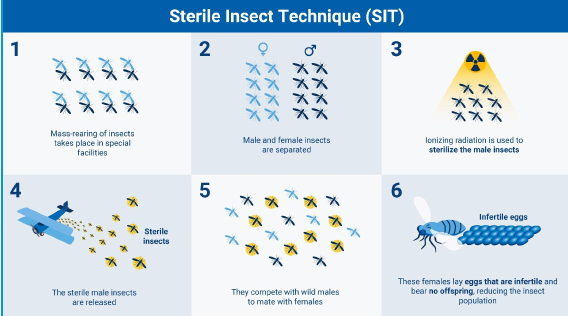
Analysis and numerical simulation of a spatio-temporal Ricker-type model for the control of Aedes aegypti mosquitoes with Sterile Insect Techniques
- Stefan Frei (University of Konstanz)
- Oscar Escobar Lasso (Universidad del Valle)
- Olga Vasilieva (Universidad del Valle)
- Reinhard Racke (University of Konstanz)
Research paper on Predator-Prey Models Peru, Germany
Analysis and numerical simulation of a Spatio-temporal Fear-Driven Predator–Prey Model with Fractional Reproduction
- Stefan Frei (University of Konstanz)
- Neisser Pino Romero (Universidad San Marcos, Lima)
Research paper on Aedes aegypti Population Dynamics Colombia, Germany
Spatial Optimal Control of Aedes aegypti Population Dynamics Integrating Aquatic Predators and Chemical Controls
- Stefan Frei (University of Konstanz)
- Heliana Arias Castro (Universidad del Valle, Cali)
- Behzad Azmi (University of Konstanz)
Research paper on stochastic control for Vector-Borne Diseases Colombia, Germany
Stochastic Control for Vector-Borne Diseases
- Carmen Ramirez Bernate (Universidad del Valle, Cali)
- Hermann Mena (MPI Magdeburg)
Multilingual textbook on numerical mathematics Germany, Peru
Introduction to Numerical Mathematics. Theory, Practice and Numerous Examples
- Thomas Richter (Otto von Guericke University Magdeburg)
- Thomas Wick (Leibniz University Hannover)
- Henry von Wahl (University of Jena)
- Dandy Rueda Castillo (Universidad Nacional Agraria La Molina, Lima)
- Stefan Frei (University of Konstanz)